
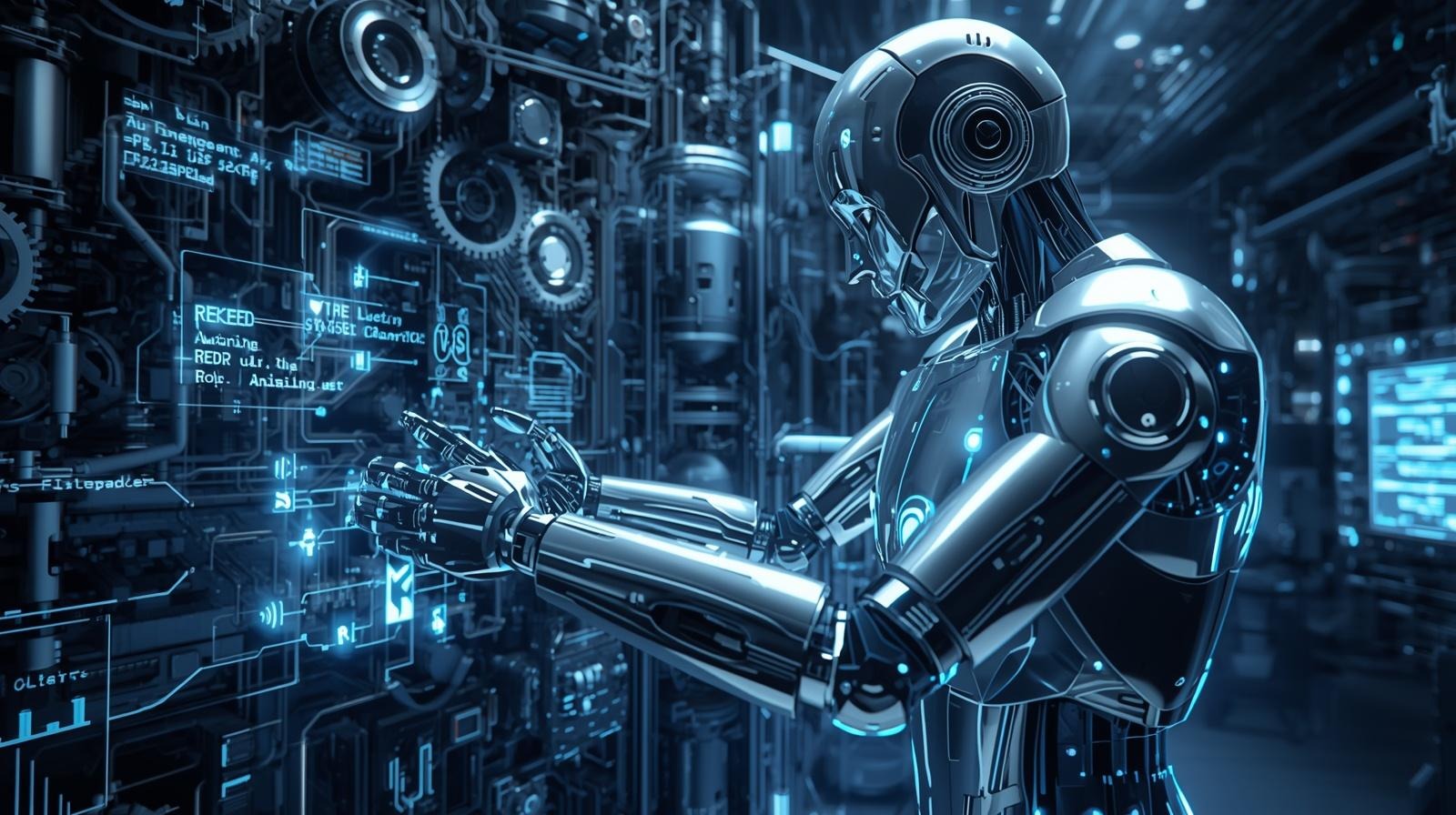
Why Robotics Is Becoming One of the Most Important Technologies ?
Robotics is rapidly reshaping the modern technological landscape. From automated factories and surgical robots to autonomous vehicles and smart warehouses, robots are now performing tasks that once required significant human effort. Because industries are increasingly adopting intelligent machines, robotics has become one of the most exciting and high-demand fields for students, engineers, and technology enthusiasts. Many beginners are interested in learning robotics but often struggle with a common question: where should they start? Robotics combines several disciplines including programming, electronics, artificial intelligence, and mechanical design, which can make the learning path seem complex at first.
This robotics learning roadmap for beginners explains the essential knowledge areas required to build a strong foundation in robotics. It covers programming languages, robotics mathematics, hardware systems, development platforms, practical projects, and robotics career opportunities. By following a structured approach, beginners can gradually develop the skills required to design and build intelligent robotic systems.
Understanding Robotics
Robotics is a multidisciplinary technology field that focuses on designing machines capable of sensing their environment, processing information, and performing actions automatically or semi-automatically. These machines combine hardware and software systems to execute tasks with speed, accuracy, and consistency. Modern robotic systems integrate several technologies. Mechanical components provide movement and structure, electronic circuits allow communication between components, and software algorithms control behavior and decision-making. Artificial intelligence is also increasingly used to enable robots to analyze data and adapt to complex environments.
Because of these capabilities, robotics applications now appear in many industries. Industrial robots assemble products in manufacturing plants, surgical robots assist doctors during delicate operations, and autonomous robots explore hazardous environments where human presence may be risky. As these technologies continue to advance, robotics is becoming a central part of modern innovation and automation.
Why Learning Robotics Is Important
The demand for robotics expertise continues to grow as businesses seek ways to improve productivity, reduce operational costs, and automate repetitive tasks. Companies around the world are investing heavily in robotics research and development to create smarter machines capable of solving real-world problems. Artificial intelligence has significantly expanded the potential of robotic systems. Intelligent robots can now analyze visual data, recognize objects, and make decisions based on sensor input. This integration of AI with robotics is opening new possibilities in healthcare, logistics, agriculture, and transportation.
For students and aspiring engineers, learning robotics provides access to a wide range of career opportunities. Robotics engineers, automation specialists, AI developers, and robotics researchers are increasingly needed across technology industries. Building robotics skills today can therefore prepare learners for some of the most innovative technology careers of the future.

Programming Languages for Robotics
Programming Languages is the foundation of robotics because robots rely on software instructions to interpret sensor data and control physical movement. Understanding programming logic enables developers to design algorithms that guide how robots behave in different situations. Python is often considered the most beginner-friendly language for robotics. Its simple syntax and extensive libraries make it suitable for robotics research, artificial intelligence applications, and rapid prototyping. Many robotics learning platforms and AI frameworks support Python, making it a practical starting point for beginners.
C++ is another widely used programming language in robotics development. Many robotics frameworks and hardware interfaces rely on C++ because it offers greater performance and precise control over system resources. This is especially important in robotics systems where real-time responses are required. Beyond learning programming syntax, beginners should focus on algorithm design, object-oriented programming, and problem-solving techniques. These skills help developers build reliable robotics applications that can handle complex real-world scenarios.
Mathematics Basics
Mathematics plays a crucial role in robotics because it allows engineers to model motion, analyze sensor data, and control robotic systems accurately. While beginners do not need advanced mathematics immediately, understanding several core areas is essential for deeper robotics development. Linear algebra is particularly important because it describes how robots move and operate within three-dimensional space. Concepts such as vectors, matrices, and coordinate transformations are frequently used in robotic motion planning and navigation.
Calculus helps engineers understand motion dynamics and control systems. It allows developers to analyze velocity, acceleration, and trajectory planning for robotic arms or mobile robots. Probability and statistics are also valuable because robots often operate in uncertain environments. Sensor readings may contain noise or incomplete information, so probabilistic algorithms help robots interpret data and make reliable decisions.
Electronics and Embedded Systems in Robotics
Robots are not purely software systems. They rely heavily on hardware components that allow them to sense and interact with the physical world. Learning basic electronics helps beginners understand how these components function together. Robotic systems typically include sensors, actuators, microcontrollers, and power systems. Sensors collect environmental data such as distance, light, or temperature. Actuators such as motors convert electrical signals into physical movement.
Microcontrollers act as the control units of many robotics systems. Platforms like Arduino and Raspberry Pi are widely used for robotics learning because they allow beginners to connect sensors, control motors, and develop simple automation systems. These platforms provide an accessible way to experiment with hardware programming and embedded system design. Understanding embedded systems helps learners see how software interacts directly with hardware components, which is an essential aspect of robotics engineering.
Robotics Software Platforms and Development Tools
Developing advanced robotic systems often requires specialized software frameworks. These platforms simplify robotics development by providing libraries, tools, and communication systems that connect different components of a robot. One of the most widely used platforms is the
Robot Operating System (ROS). ROS provides tools for robot communication, sensor integration, navigation, and motion planning. It allows developers to build complex robotics applications using modular software components.
Simulation environments also play an important role in robotics development. Before testing algorithms on real hardware, developers often run simulations to analyze robot behavior in virtual environments. This reduces the risk of hardware damage and allows engineers to experiment with complex robotics algorithms safely. By learning robotics software frameworks and simulation tools, beginners can significantly accelerate their robotics development skills.
Hands-On Robotics Projects for Beginners
Practical experience is one of the most effective ways to learn robotics. Building projects allows beginners to apply theoretical knowledge and gain real engineering experience. Simple robotics projects can include line-following robots, obstacle-avoiding robots, or basic robotic arms. These projects combine programming, electronics, and mechanical design, allowing learners to understand how different robotics components work together.
Working on projects also strengthens problem-solving abilities. Robotics development often requires debugging hardware connections, adjusting algorithms, and optimizing system performance. Through experimentation and iteration, beginners develop the analytical thinking required in robotics engineering. In addition, robotics projects help learners build a technical portfolio. Demonstrating practical projects can be extremely valuable when applying for internships, research programs, or engineering positions.

Online Robotics Training and Learning Resources
Many learners prefer structured guidance when exploring robotics for the first time. Online learning platforms now provide comprehensive robotics courses like robotics courses on Coursera and robotics tutorials on edX that cover both theoretical concepts and practical applications. These training programs often include lessons on robot programming, artificial intelligence integration, robotics simulation, and hardware development. Interactive projects and assignments allow students to apply their knowledge in realistic scenarios. Online robotics training also offers flexibility. Beginners can learn at their own pace while gradually building expertise across different robotics disciplines. For many aspiring engineers, structured robotics courses provide a helpful pathway toward developing professional robotics skills.
Future of Robotics Careers
The future of robotics careers appears extremely promising as automation technologies continue to expand across industries. Robotics is already transforming healthcare, manufacturing, agriculture, logistics, and space exploration. Advancements in artificial intelligence are enabling robots to perform increasingly sophisticated tasks. Intelligent robotic systems can now analyze visual data, navigate complex environments, and collaborate with humans in workplaces.
Because of these developments, demand for robotics professionals is expected to continue growing. Careers in robotics engineering, AI robotics development, autonomous systems design, and automation technology are becoming some of the most sought-after roles in the technology sector. Students who begin building robotics skills today will be well positioned to contribute to these innovations and participate in the next generation of technological advancement.
Conclusion
Robotics is one of the most dynamic and transformative technology fields of the modern era. By following a clear robotics learning roadmap, beginners can gradually develop the technical knowledge required to design and build intelligent robotic systems. Learning programming languages for robotics, understanding robotics mathematics, exploring electronics and embedded systems, and gaining practical experience through robotics projects are all essential steps in the learning journey. Robotics software platforms and online training programs can further accelerate skill development and provide valuable hands-on experience. As automation and intelligent machines become increasingly important in modern industries, robotics will continue to shape the future of technology. Beginners who start learning robotics today can build valuable expertise and pursue rewarding careers in one of the most innovative technology domains.
Frequently Asked Questions
What is the best way to start learning robotics?
The best way to start learning robotics is by understanding programming fundamentals, basic electronics, and essential mathematics. After learning these concepts, beginners should begin building simple robotics projects to gain practical experience.
Which programming languages are used in robotics?
Python and C++ are the most commonly used programming languages in robotics because they support robotics frameworks, artificial intelligence libraries, and hardware control systems.
Do beginners need advanced mathematics to learn robotics?
Advanced mathematics is not required at the beginning, but understanding linear algebra, calculus, and probability becomes important when working with robotics algorithms, motion planning, and machine learning.
Can robotics be learned online?
Yes, many universities and online learning platforms offer robotics courses that include lectures, simulations, and practical robotics projects that help learners build real-world robotics skills.
Is robotics a good career choice?
Robotics is considered one of the most promising technology careers because automation, artificial intelligence, and intelligent machines are increasingly being adopted across industries worldwide.