
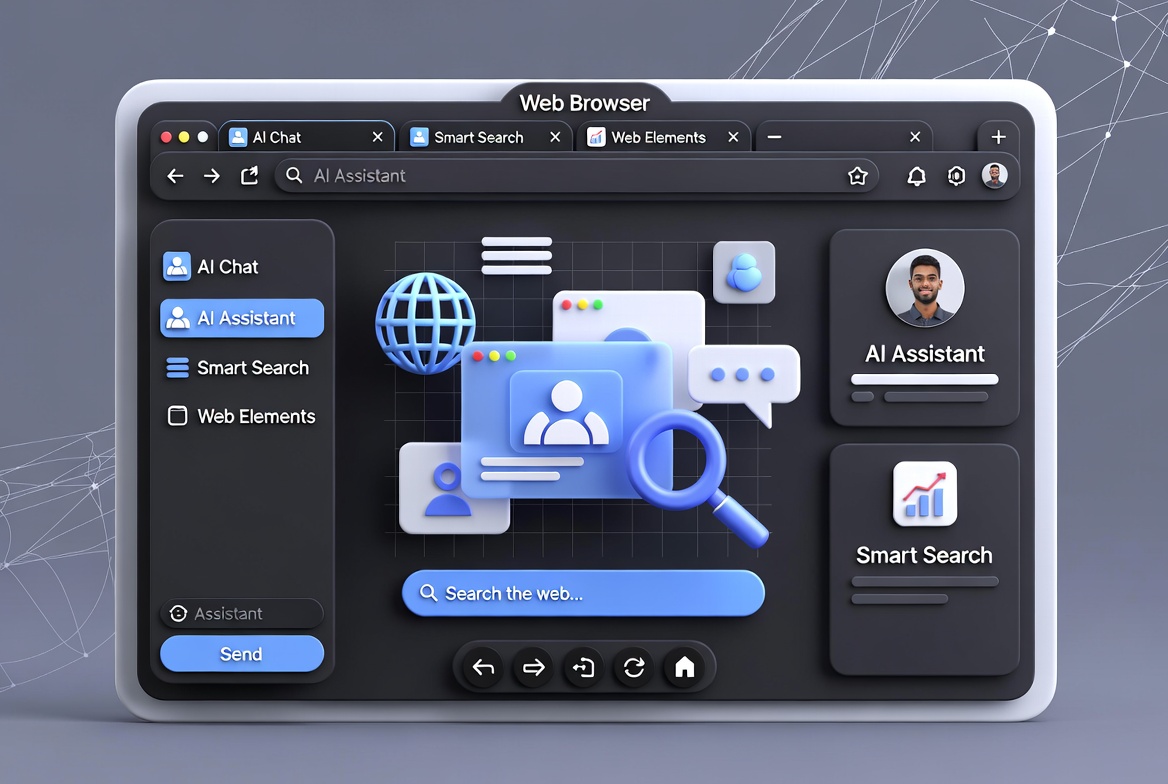
Web browsing is entering a new phase. Major tech companies are now rolling out AI-powered browsers that promise faster search, smarter assistance, and better user control. Unlike traditional browsers, these new tools do more than open websites. They analyze intent, summarize content, and help users complete tasks with fewer clicks. Because of this, the browsing experience is becoming more interactive and more personal.
Why AI-powered browsers are gaining attention now
The internet is crowded with information. As a result, users often struggle to find what they need. Search results can feel overwhelming. Therefore, browser makers are turning to AI for help. AI-powered browsers can understand context. They can also predict what users want next. For example, a browser may summarize a long article or compare products automatically. This saves time and reduces effort. In addition, AI reduces tab overload. Instead of opening many pages, users can ask questions directly inside the browser.
How AI-powered browsers change daily browsing
Traditional browsers act as passive tools. In contrast, AI-powered browsers act as assistants. They help users read, write, and research faster. For instance, AI can rewrite emails, summarize documents, or explain complex topics in simple words. As a result, users spend less time switching between apps. Moreover, AI can highlight key points on a page. This helps readers focus on what matters most. Therefore, productivity improves without extra software.
Privacy concerns around AI-powered browsers
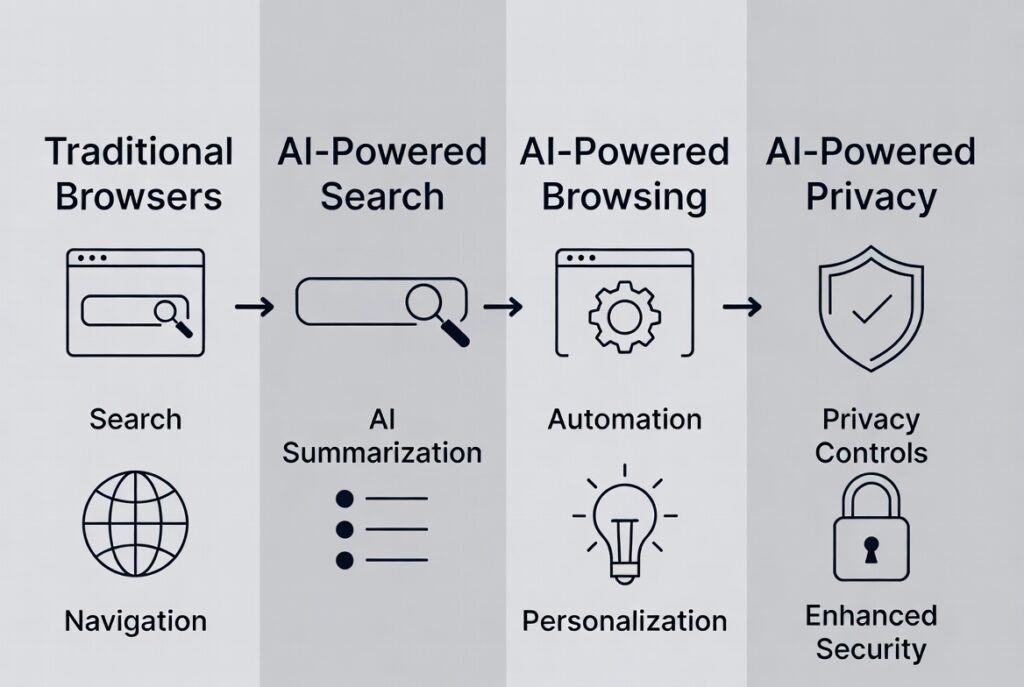
Privacy remains a major concern. AI browsers collect data to function well. Because of this, users worry about tracking and misuse. To address this, companies claim they are using on-device processing and encrypted systems. Some browsers allow users to disable AI tracking features. However, experts say transparency is critical. Users must know what data is used and why. Without trust, adoption may slow.
Expert opinion on AI-powered browsers
Tech analysts see both opportunity and risk. One industry expert stated:
“AI-powered browsers could redefine the web, but only if users remain in control of their data.”
This view highlights a key issue. Innovation must balance convenience and privacy.
The technology behind AI-powered browsers
Behind the scenes, AI browsers rely on large language models. These models process text, context, and user behavior. Cloud computing supports heavy tasks, while local processing improves speed. In addition, new AI chips make real-time responses possible. These chips reduce latency and energy use. Therefore, browsing feels smooth and responsive. At the same time, browser extensions are evolving. Many now integrate AI features directly. This creates a unified experience.
Competition in the AI-powered browser market
Several tech companies are competing in this space. Some are updating existing browsers. Others are launching new AI-first platforms. Competition is pushing rapid innovation. As a result, features improve quickly. Users benefit from better tools and more choices. However, market dominance remains uncertain. Smaller players may struggle to compete with large ecosystems.
External context: AI and the future of the web
Global discussions on AI and digital rights continue to grow. Organizations such as the World Wide Web Consortium emphasize responsible AI use in web technologies. These principles are outlined in broader web governance resources available at w3.org.
These discussions influence how AI browsers evolve. Standards and guidelines may shape future features.
Challenges facing AI-powered browsers
Despite excitement, challenges exist. AI accuracy is not perfect. Sometimes summaries miss nuance. Therefore, human judgment remains important. Performance is another concern. AI features can consume more resources. Older devices may struggle. Finally, regulation may impact rollout. Governments are reviewing AI use in consumer products. New rules could affect browser design.
What users should expect next
In the coming months, expect more AI features. Browsers may offer deeper personalization. They may also integrate voice and visual search. In addition, privacy dashboards may become standard. This helps users manage AI settings easily. Over time, browsing may feel less like searching and more like conversing.
Final takeaway
AI-powered browsers are changing how people interact with the web. They promise speed, clarity, and smarter assistance. However, success depends on trust, transparency, and user control.
If companies strike the right balance, AI browsers could define the next era of internet use.