
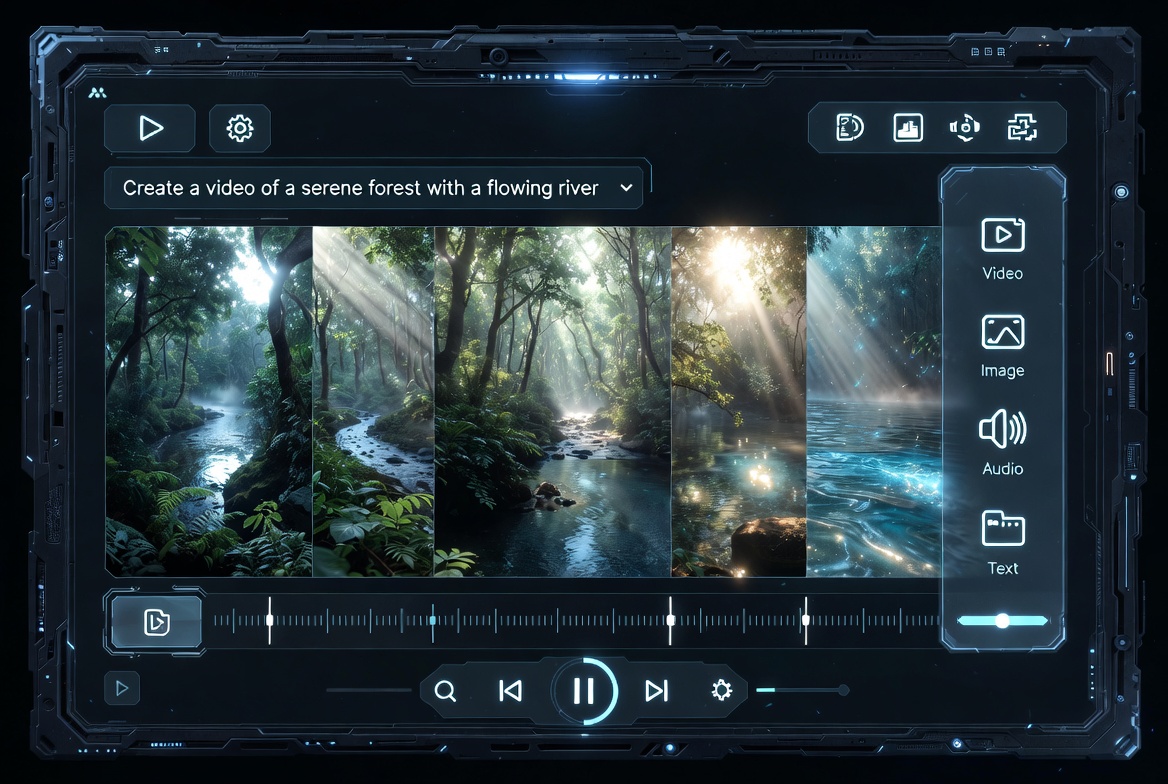
Video creation is changing fast. New AI-generated video tools now allow users to create full videos from text prompts. Because of this, content production is becoming faster, cheaper, and more accessible. Creators no longer need advanced editing skills. Instead, AI handles visuals, voice, and timing. As a result, video creation is no longer limited to professionals.
Why AI-generated video tools are growing rapidly
Demand for video content keeps rising. Social media platforms favor video. Marketing teams also rely on video more than before. Therefore, production speed matters. AI-generated video tools reduce creation time from days to minutes. They also lower costs. Small teams can now compete with large studios. In addition, remote work has increased the need for scalable content. AI tools fit this need well.
How AI-generated video tools work
Most AI video platforms start with text input. Users describe a scene or message. Then, the AI generates visuals, animations, and voiceovers. These systems rely on large AI models trained on video, images, and speech. Cloud computing supports fast rendering. Meanwhile, AI optimization improves quality over time. Because of this process, output improves with usage and feedback.
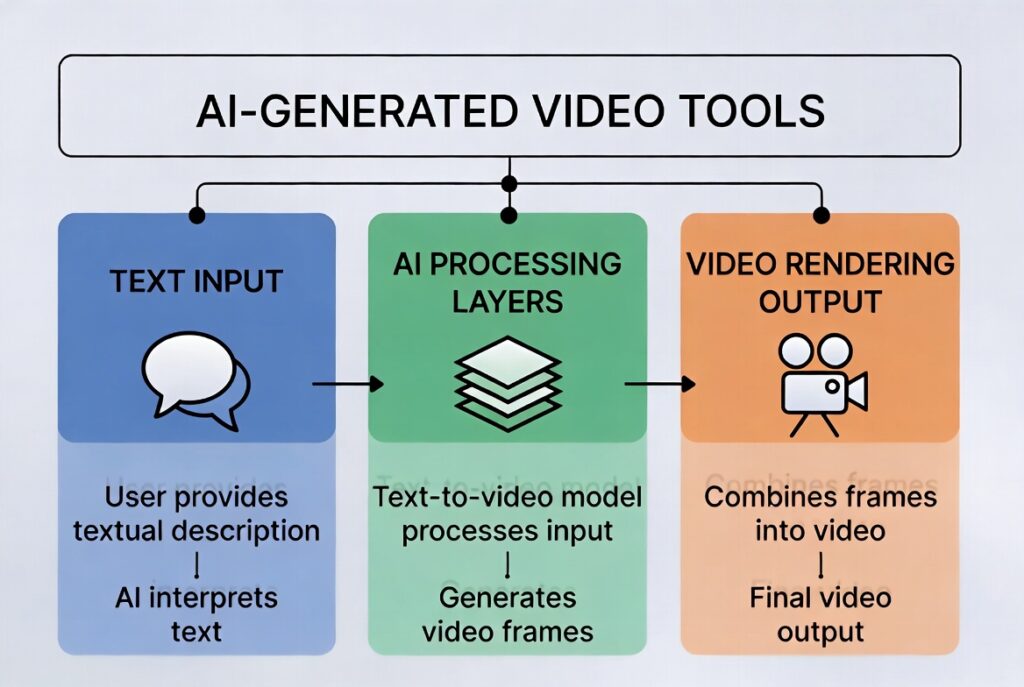
AI-generated video tools and creative workflows
Traditional video workflows involve many steps. Script writing, filming, editing, and revisions take time. AI simplifies this flow. For example, marketing teams can generate multiple video versions quickly. This supports testing and personalization. Moreover, educators can create explainer videos without cameras or studios. As a result, learning content scales easily.
Expert opinions on AI-generated video tools
Industry experts see opportunity but also risk. One digital media analyst noted:
“AI-generated video tools unlock creativity, but creators must still guide the message and tone.”
This highlights an important point. AI assists creativity, but human direction remains essential.
Ethical and copyright concerns
As adoption grows, concerns rise as well. AI-generated video tools often train on large datasets. Because of this, questions around copyright and consent emerge. Some creators worry about imitation. Others worry about misuse, such as deepfake content. Therefore, platforms are adding safeguards. Watermarking and disclosure labels are becoming more common. These features help protect trust and transparency.
Broader AI tech trends supporting video generation
Advances in general AI technology support this growth. Faster GPUs and AI chips enable real-time rendering. Meanwhile, text-to-image and text-to-speech models continue improving. Edge computing also helps. Some processing now happens closer to the user. This reduces delays and improves responsiveness. Together, these tech advances push AI video tools forward.
Market competition in AI-generated video tools
Competition is intense. Many startups are entering the market. At the same time, established tech companies are adding AI video features. This competition drives innovation. Features improve quickly. Prices also drop. However, market consolidation may happen later. Smaller players may merge or exit.
External context: AI and digital media standards
Global organizations continue discussing AI responsibility in media. The World Economic Forum has highlighted the need for ethical AI use in creative industries, including content transparency and misuse prevention, as discussed in its technology policy resources at weforum.
These discussions influence how AI video platforms evolve.
Challenges for widespread adoption
Despite growth, challenges remain. AI videos sometimes lack emotional depth. Viewers may notice artificial patterns. Customization is another issue. While AI tools are flexible, they may not match all brand styles perfectly. Finally, internet access and hardware limits affect adoption in some regions.
What comes next for AI-generated video tools
In the near future, expect better realism. Facial animation and motion will improve. Voice emotion will also become more natural. Personalized video at scale may become standard. Brands could create thousands of variations instantly. In addition, regulation may shape development. Clear rules could improve trust and adoption.
Final takeaway
AI-generated video tools are transforming digital content creation. They lower barriers, increase speed, and expand creative reach. However, responsible use remains essential.
When guided by human creativity and ethical standards, these tools can redefine how stories are told online.