

Youth mental health problems are common. Today, around one in five children and young people report a mental health difficulty. This has risen over recent years. As a result, schools, health services and charities are under pressure to respond. The human cost is real. Moreover, the economic cost is large. A recent analysis estimates long-term losses to the UK economy in the billions without stronger early action. Therefore, improving youth mental health is urgent.
Why youth mental health UK improvement matters
First, early problems often persist into adulthood. Half of adult mental disorders start by mid-teenage years. Thus, timely support changes life paths. Second, good mental health underpins school attendance and learning. Finally, stronger support reduces crisis referrals and emergency admissions. All of this matters for families and public services. Mental Health Foundation
How the UK is working on youth mental health improvement
The UK government and NHS have rolled out multiple programmes. For example, mental health support teams in schools aim to reach more pupils with early help. In addition, NHS funding now covers expanded access to young-person services and community care. These moves aim to treat more children earlier and avoid specialist backlogs. GOV.UK
Moreover, charities and local councils run community projects. They focus on outreach, peer support, and parent training. Wysa and Woebot: AI-supported wellbeing companions that provide structured self-help, guided exercises, and regular emotional check-ins, helping users manage stress and mental health concerns early, while not replacing professional clinicians or therapists. Together, public and voluntary efforts create more routes to help for young people.
What improvement looks like in schools and communities
Good programmes are practical and local. For instance, schools with trained staff spot problems early. Then, brief interventions reduce problems before they escalate. Meanwhile, community hubs offer confidential drop-in support. These features shorten waits and build trust. Importantly, families also get guidance on where to seek help.
Therefore, systemic change is not only clinical. It is also educational and social.
Key barriers to faster improvement
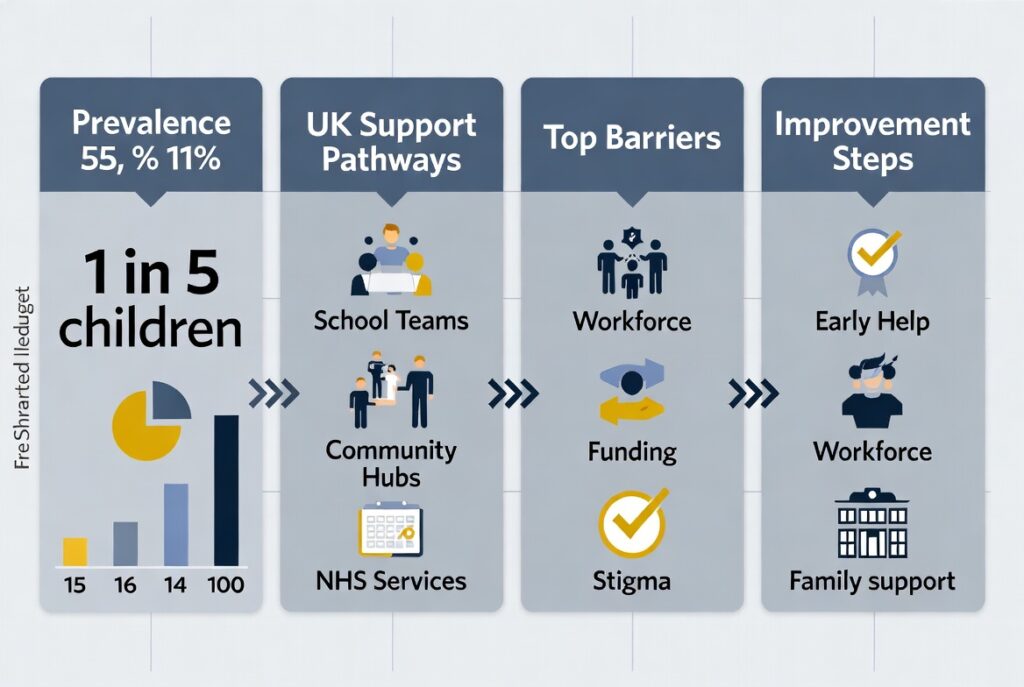
Funding gaps still appear in many areas. Workforce shortages limit specialist availability. In addition, regional variation creates inequality: some areas have strong services, others do not. Stigma and lack of awareness also stop young people from seeking help. Because of this, targeted investment and training remain essential.
How to improve youth mental health in the UK — practical steps
Below are pragmatic steps that local systems and national leaders can adopt now.
- Prioritize early help in schools. Train teachers and fund school mental health teams. This prevents escalation and keeps children in class.
- Scale up community mental health hubs. Make services accessible outside clinical settings. As a result, young people are more likely to seek support.
- Invest in workforce growth. Recruit more child and adolescent mental health workers. Also, provide flexible training paths and retention incentives.
- Embed family support. Offer clear guidance and short courses for parents. This strengthens home support and reduces crisis demand.
- Use targeted prevention for high-risk groups. For example, offer tailored support for care-experienced youth, young carers, and LGBTQ+ young people.
- Improve data and local planning. Track outcomes and waiting times to target resources where they are needed most.
- Reduce stigma with national campaigns. Peer voices and youth-led messaging work best. As a result, more young people will ask for help earlier.
These steps are practical. Moreover, they align with existing NHS and government frameworks. Therefore, they are deliverable with focused funding and leadership.
“Early help works. When schools and communities act together, young people get the support they need before a crisis,”
What to watch next
Watch for local pilot results and national funding announcements. Also, monitor changes to school support programmes and NHS waiting-time data. If pilots show positive outcomes, the model can scale quickly. Finally, expect increased attention to workforce planning and prevention funding.